|
Product Details:
|
| Outer Diameter: | 50 - 1500 Mm, 10mm | Head Shape: | Round |
|---|---|---|---|
| Out Dia: | 1/2''~48'' | Grade: | AISI 4140, 4340, 8620, 4130 |
| Width: | Can Be Customized | Elongation: | ≥12% |
| Thickness: | 1-100MM | Ultrasonic Test Standard: | SPE1921-GR3,CLASS D/D Or E/E |
| Annealed Hardness: | 170-207 | Material: | Alloy Steel |
| Technology: | Cold Rolled; Hot Rolled |
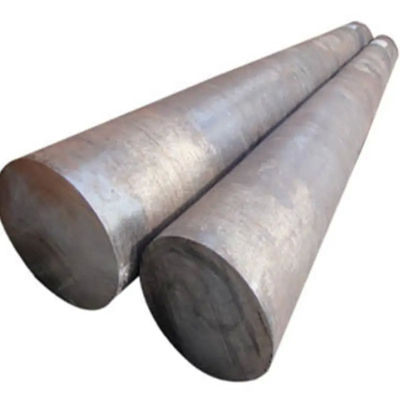
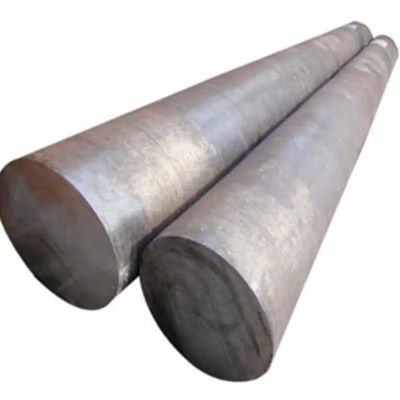
Alloy steel round bars are solid cylindrical bars made of steel that has been enhanced with additional alloying elements such as chromium, molybdenum, nickel, and manganese . These elements are added to significantly improve the metal's mechanical properties, including its strength, hardness, toughness, and wear resistance, making it suitable for highly demanding engineering applications .
Key specifications and parameters for alloy steel round bars are highly dependent on the specific grade.
Common Grades: 4140, 4130, 4340, 8620 (ASTM/SAE); 42CrMo4, 34CrNiMo6 (EN/DIN) .
Typical Diameter Range: From small diameters (e.g., 2.2 mm) to large sections (e.g., 500 mm or 12.5 inches) .
Mechanical Properties (Example for 4140):
Tensile Strength: ~108,000 psi .
Yield Strength: ~68,000 psi .
Hardness: ~217 BHN (Brinell) or 17 HRC (Rockwell) .
Standards: Commonly manufactured to ASTM, AISI, DIN, BS, and JIS standards .
Due to their high strength and durability, these bars are utilized in a wide range of heavy-duty and high-stress industrial applications .
Automotive & Heavy Equipment: Gears, shafts, axles, crankshafts, and pistons .
General Engineering: Fasteners (bolts, valves), spindles, fixtures, and couplings .
Aerospace: Aircraft structural parts, landing gear components, and fittings .
Energy & Mining: Components for power generation and mineral processing equipment .
The primary benefits of using alloy steel round bars include:
Exceptional Strength and Toughness: Offers high tensile and yield strength combined with excellent resistance to impact and shock .
Superior Wear and Abrasion Resistance: Performs reliably in high-friction environments, extending the service life of components .
High Hardenability: Can be heat-treated to achieve a wide range of mechanical properties, from high ductility to extreme hardness, as required by the application .
Versatility and Machinability: While providing high performance, many grades (especially in the annealed state) are ductile and relatively easy to machine and fabricate .
Alloy Composition: The specific combination of elements dictates the grade, such as chromium-molybdenum ("chromoly") steel .
Heat Treatability: Most alloy steel round bars are supplied in a condition (e.g., annealed, normalized, or quenched and tempered) that allows for further heat treatment by the end-user .
Surface Finish and Tolerance: Available in a variety of finishes, including hot-rolled (black), cold-drawn, and precision-ground, with corresponding levels of dimensional accuracy .
The specific processing steps will depend on the desired application, but a general process is as follows:
Selection: Choose the correct alloy steel grade (e.g., 4140 vs. 4340) based on required mechanical properties (strength, toughness) and the application environment.
Machining & Shaping: The bar can be cut, turned, drilled, and welded. Machining is typically easier when the material is in its annealed (softest) state .
Heat Treatment: For maximum strength and hardness, the machined component must undergo a heat treatment process:
Hardening (Quenching): Heat the part to a specific temperature (e.g., 1150-1180°C for M2 tool steel) and rapidly cool it in oil or water .
Tempering: Reheat the hardened part to a lower temperature (e.g., 560-580°C) to reduce brittleness and achieve the final desired combination of hardness and toughness ![]()
Contact Person: Ms.
Tel: 13524668060