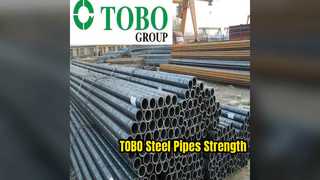
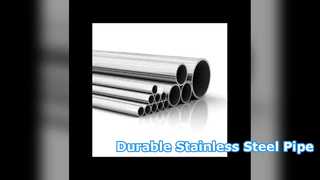
Brief: See how this offering can bring practical value to common tasks and projects. In this video, we showcase the Austenitic Stainless Steel Welded Pipe A312 TP 310H, highlighting its high-temperature strength and corrosion resistance. You'll learn about its key applications in demanding industries like petroleum, power, and chemical processing, and see how its nitrogen-enhanced composition provides superior performance in challenging environments.
Related Product Features:
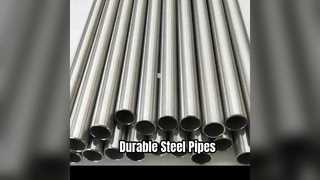
This welded pipe is made from A312 TP 310H, a low-carbon, nitrogen-enhanced austenitic stainless steel for superior performance.
It offers excellent resistance to general corrosion, pitting, and crevice corrosion, outperforming conventional chromium-nickel steels.
The pipe provides higher creep, stress-rupture, and tensile strength at elevated temperatures, ideal for high-heat applications.
Available in a thin-wall SCH 10 configuration with DN 1.1/2" size, suitable for various industrial piping systems.
Manufactured to ASTM F138 standards, ensuring consistent quality and reliability for B2B industrial use.
The nitrogen content enhances solid solution hardening, increasing yield strength and resistance to sensitization.
It is weldable using common fusion and resistance methods, with recommendations for low-carbon filler metals.
Suitable for global markets, including America, Africa, the Middle East, and Southeast Asia, with flexible shipping options.
FAQs:
What are the key advantages of using A312 TP 310H stainless steel welded pipes?
A312 TP 310H pipes offer enhanced resistance to general corrosion, pitting, and crevice corrosion, along with higher creep, stress-rupture, and tensile strength at elevated temperatures. The nitrogen content also provides solid solution hardening for improved yield strength and sensitization resistance.
In which industries and applications is this thin-wall steel tubing commonly used?
This tubing is widely used in demanding sectors such as petroleum, power generation, chemical processing, construction, gas, metallurgy, and shipbuilding, where high-temperature strength and corrosion resistance are critical.
How does the welding process for A312 TP 310H pipes ensure durability and corrosion resistance?
These pipes are highly weldable using standard fusion and resistance methods. To preserve corrosion resistance and avoid cracking, it is recommended to use low-carbon filler metals like ATI 316L or E318 and prevent contamination from elements like copper or zinc.
What standards and certifications does this product comply with?
The product conforms to ASTM F138 and is manufactured under ISO9001 and ISO9000 quality management systems, ensuring it meets international standards for material composition, dimensions, and performance.