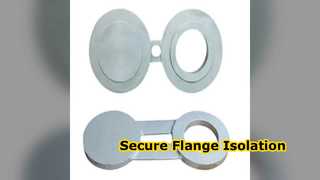
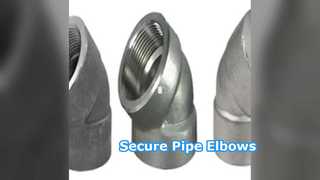
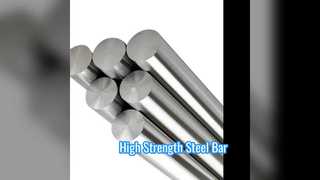
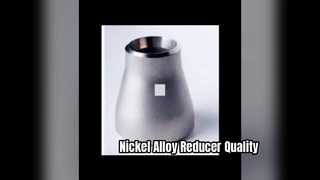
Brief: Get a guided demo that shows common workflows and troubleshooting tips for Super Duplex Stainless Steel Pipe. This video provides a detailed walkthrough of the National Standard Carbon Steel Flat Welding Flange, Stainless Steel With Neck Butt Welding Forging Alloy Blind, explaining its role in pipeline connections, material specifications, and the rigorous testing procedures it undergoes.
Related Product Features:
Available in various pressure classes including 150#, 300#, 600#, 900#, 1500#, and 2500# with corresponding size ranges.
Manufactured from a wide range of materials including carbon steel, low temperature steel, nickel steel, chrome molybdenum steel, and various stainless steel grades.
Offers multiple connection types such as threaded connection flanges, welded flanges, and clip flanges.
Comprehensive testing includes chemical component analysis, mechanical properties, metallurgical analysis, and impact testing.
Additional quality checks involve hardness testing, ferrite testing, intergranular corrosion testing, and non-destructive tests like X-ray, PT, and UT.
Certified by major international standards including API, ISO, SGS, BV, CE, PED, and others.
Features extensive stock availability ensuring prompt delivery to global clients.
Supported by a 15-year experienced QC team and serves over 150 international customers in the oil and gas industry.
Faqs:
What is a flange and how is it used in piping systems?
A flange, also called a flange plate, is a component that connects pipes together, attached to the pipe end. It forms a detachable connection using a flange, gasket, and bolt assembly to create a sealed structure, used in both pipeline devices and equipment import/export points.
What materials are available for these flanges?
Flanges are available in various materials including WCB (carbon steel), LCB (low temperature carbon steel), LC3 (3.5% nickel steel), multiple chrome molybdenum steel grades, various stainless steels (304, 304L, 316, 316L, 347), and specialized alloys like Monel and Hastelloy nickel alloys.
What quality certifications and testing does TOBO provide for their flanges?
TOBO flanges come with certifications from API, ISO, SGS, BV, CE, PED, KOC, CCRC, PDO, and CH2M HILL. Testing includes chemical analysis, mechanical properties, metallurgical analysis, impact testing, hardness testing, ferrite testing, intergranular corrosion testing, and non-destructive tests like X-ray, PT, UT, HIC, and SSC testing.
What are the main advantages of choosing TOBO flanges?
Key advantages include abundant stock for prompt delivery, reasonable packaging and processes, 15 years of QC team experience with API & ASTM trained engineers, and service to over 150 global customers including major industry players like Petrofac, Fluor, Hyundai Heavy Industry, and Shell.